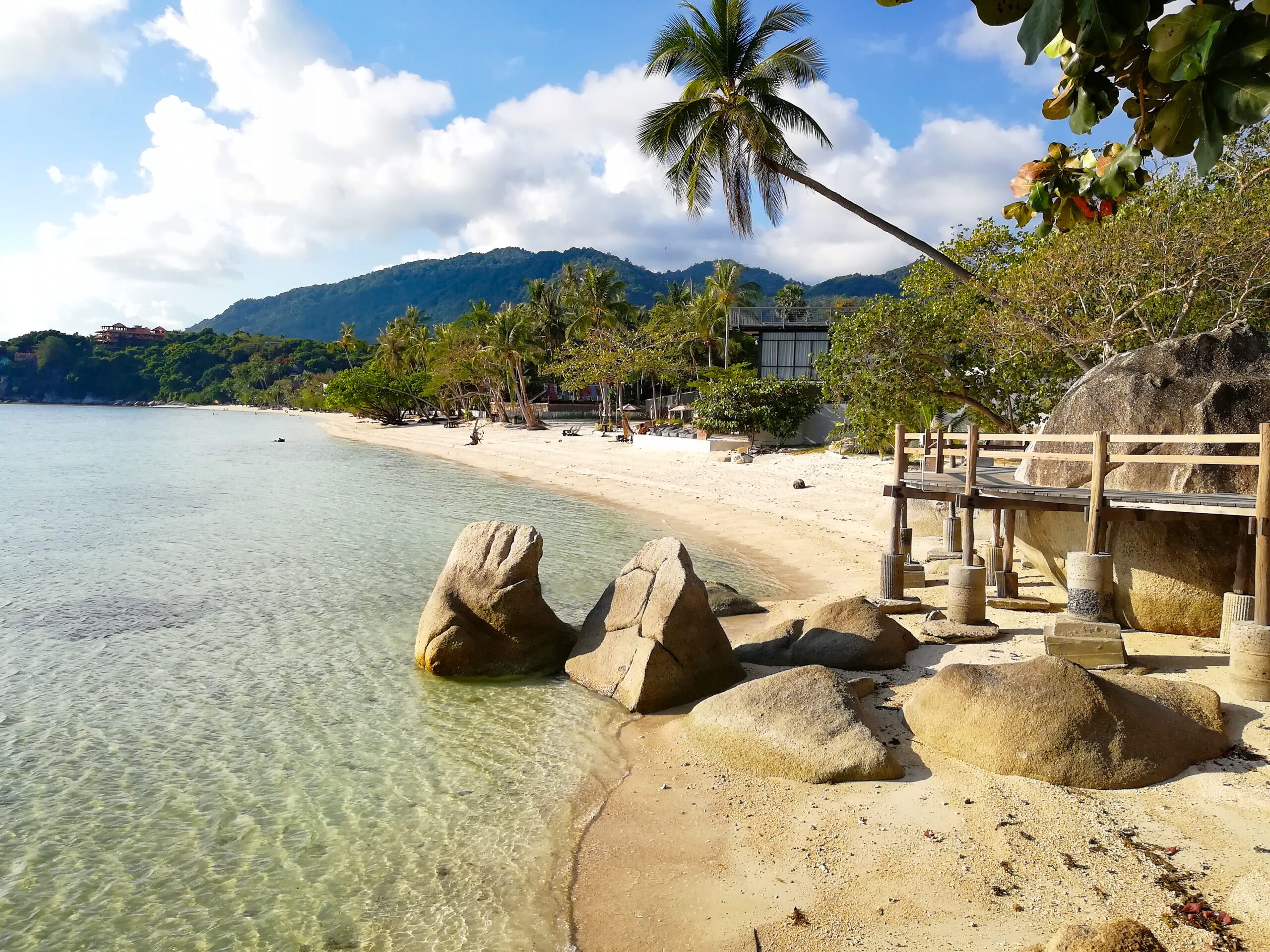
Buying Property in Koh Phangan as a Foreigner: The Complete Step-by-Step Guide
Buying property in Koh Phangan as a foreigner can be an exciting way to establish a home, second residence or investment in Thailand. But while finding a property can be relatively straightforward, understanding exactly what you can own, how you can own it and what needs to be checked before you commit your money is much more important.
Koh Phangan has a particularly diverse property market. Buyers can encounter houses, villas, condominiums, land, developments and properties offered with different freehold and leasehold arrangements. The legal position can therefore vary considerably from one property to another.
For a foreign buyer, the question should not simply be:
“Can I buy this property?”
It should be:
“What exactly am I buying, what ownership or legal rights will I receive, how are those rights documented, and what happens in the future?”
That distinction is fundamental.
Thailand generally restricts direct foreign ownership of land, while qualifying condominium units can be owned by foreigners under specific conditions. Leasehold arrangements can provide another route to securing rights to use property, while company structures require particular caution and should never be used simply as a nominee arrangement to circumvent Thai land-ownership restrictions. Official Thai government information confirms these distinctions and the separate rules applying to condominium ownership.
This guide takes a foreign buyer through the entire process of buying property in Koh Phangan, from deciding what to buy and finding the right location through to due diligence, negotiation, contracts, taxes, Land Office completion and managing the property after purchase.
It also explains the island-specific issues that can easily be overlooked when buying property remotely, including road access, land boundaries, water, electricity, internet, drainage, surrounding development and the practical realities of hillside properties.
Important: This guide provides general information and is not legal, tax, financial or investment advice. Thai property laws and administrative requirements can change, and the appropriate ownership structure depends on the individual buyer and property. Foreign buyers should obtain independent advice from a qualified Thai property lawyer before signing a binding agreement or transferring a substantial deposit.

At a Glance: The Foreign Buyer Property Process
Although every transaction is different, a well-managed purchase generally follows this sequence:
| Stage | What happens | Main objective |
|---|---|---|
| 1 | Define your requirements | Decide what you actually want to buy |
| 2 | Establish your budget | Understand the real acquisition cost |
| 3 | Understand ownership | Determine which structures may work for you |
| 4 | Research Koh Phangan | Choose the right area and type of property |
| 5 | Search and view properties | Find and physically inspect suitable properties |
| 6 | Compare and negotiate | Establish whether the price and terms make sense |
| 7 | Appoint a lawyer | Put independent legal advice in place |
| 8 | Conduct due diligence | Investigate ownership, title, access and property issues |
| 9 | Agree the contract | Document the purchase properly |
| 10 | Prepare completion | Arrange funds, documents, taxes and registration |
| 11 | Complete the purchase | Register the relevant ownership or property rights |
| 12 | Take possession | Handover, utilities, insurance and management |
| 13 | Manage the property | Maintain, rent or use the property long-term |
The important thing is that these stages should not be treated as a race.
A buyer who spends another two or three weeks investigating an issue discovered during due diligence is generally in a much stronger position than a buyer who rushes to completion simply because the seller wants the transaction completed quickly.

Can a Foreigner Buy Property in Koh Phangan?
Yes, but the answer depends on the type of property and the ownership structure.
Foreigners can own qualifying condominium units under Thailand’s condominium legislation, subject to the applicable foreign ownership restrictions. Government guidance states that foreign ownership in a registered condominium is limited to 49% of the total area of the condominium building, and a foreign buyer needs confirmation from the condominium juristic person that the foreign ownership quota permits the transfer.
Land is different.
Direct foreign ownership of Thai land is generally restricted, although Thai law contains limited exceptions subject to specific conditions and approvals. The government’s information on foreign real-estate ownership also identifies long-term lease arrangements as a route available to foreigners.
This distinction is especially important when looking at a house for sale in Koh Phangan.
A house and the land underneath it are not necessarily the same legal asset.
A foreign buyer may therefore need to consider a structure in which the land is held separately while the buyer obtains rights relating to the building and/or a registered lease over the land.
That is why the ownership structure needs to be understood before you pay a deposit, rather than after you have already fallen in love with a property.
What Can a Foreigner Own in Thailand?
The following table provides a simplified comparison, but it should not be treated as a substitute for legal advice on a particular property.
| Structure | What the buyer may receive | Particularly relevant to | Main issue to investigate |
|---|---|---|---|
| Condominium freehold | Registered ownership of a qualifying condominium unit | Foreign buyers wanting direct freehold ownership | Foreign quota and condominium registration |
| Registered leasehold | Contractual/registered right to use land or property for the agreed term | Houses and land-related properties | Lease term, registration, renewal, transfer and expiry |
| Building ownership + land lease | Ownership of the building together with rights to use the land | Some houses and developments | Exact separation of building and land rights |
| Thai company | Property held by a Thai juristic person | Specific legitimate business situations | Corporate compliance and prohibition on nominee arrangements |
| Limited statutory land exception | Potential land ownership subject to strict legal conditions | Exceptional circumstances | Eligibility, investment requirements and government approval |
The key point is that there is no universal ownership solution for every foreign buyer.
A structure that may be appropriate for one property may not be appropriate for another.

Condominium Freehold Ownership
For a foreign buyer who wants direct freehold ownership, a qualifying condominium can be one of the clearest routes available in Thailand.
However, there are several conditions to check.
The building needs to be properly registered as a condominium, and the foreign ownership quota must allow the transaction.
Thailand’s official guidance states that foreigners may hold condominium ownership within the 49% foreign quota. The condominium juristic person provides confirmation of the foreign proportion for use in the transfer process.
This means that a foreign buyer should not assume that an apartment-style property can automatically be purchased freehold.
Before proceeding, establish:
Is this legally registered as a condominium?
Is the specific unit eligible for foreign ownership?
Is sufficient foreign quota available?
What documentation will be required for the transfer?
Are there any outstanding fees or obligations attached to the unit?
For qualifying purchases, documentation concerning the transfer of foreign funds into Thailand can also be important. Government guidance notes that foreign buyers may need bank evidence demonstrating the transfer of funds from overseas.

Leasehold Property in Koh Phangan
Leasehold is particularly relevant to foreign buyers looking at houses and properties connected to land.
A lease gives the buyer a right to use property for a defined period. It does not mean that the buyer owns the underlying land.
A 30-year lease is a commonly encountered structure in Thailand.
This is particularly important because property marketing can sometimes make leasehold arrangements sound simpler than they actually are.
You may see terms such as:
30-year lease
30 + 30 years
30 + 30 + 30 years
These should not automatically be interpreted as equivalent to owning the property for 90 years.
The initial lease term and any future renewal need to be considered separately, and the exact legal rights depend on the agreement and applicable law.
Thailand’s government information currently describes long-term leases with a maximum lease term of 30 years and refers to potential renewals subject to the lessor’s consent.
For that reason, a foreign buyer should have the actual lease reviewed rather than relying on the wording used in an advertisement.

What Should a Foreign Buyer Check in a Lease?
The lease is effectively the document defining your rights to use the property, so it deserves the same level of attention as the sale contract.
Your lawyer should examine the agreed term and determine whether and how the lease is registered.
The agreement should also be reviewed for provisions concerning transfer, assignment, inheritance, subleasing, sale of the building, termination, default, maintenance and what happens when the lease reaches its expiry.
The relationship between the landowner and the building owner also needs to be clear where these are separate.
For example, if you purchase a house while leasing the underlying land, you need to understand exactly what happens to the house when the lease ends.
This is one of the reasons that phrases such as “you own the house” are not sufficient on their own.
The buyer needs to know what that statement means legally.

What About the Proposed 99-Year Lease Changes?
Foreign buyers may encounter older articles or sales material discussing proposals to extend Thai property leases from 30 years to 99 years.
There have been government proposals concerning longer lease terms and increased foreign condominium ownership, but proposals and policy announcements should not be confused with the law currently governing a particular transaction.
For example, Thailand’s Public Relations Department reported in 2024 that the government had tasked the Ministry of Interior with considering changes that would extend leases to 99 years and increase the foreign condominium ownership limit.
A buyer should therefore not purchase a property on the assumption that a proposed future legal change will definitely apply.
Always have the current legal position confirmed when you buy.

Buying a House in Koh Phangan as a Foreigner
Buying a house requires more investigation than simply asking whether the house is freehold.
The first question should be:
Who owns the land?
The second is:
Who owns the building?
The third is:
What legal rights will I receive when I complete the purchase?
A foreign buyer may encounter a structure where the land is held separately and the buyer has leasehold rights to the land together with ownership rights relating to the building.
This can be a legitimate arrangement when properly structured and documented, but the buyer needs to understand exactly what is being acquired.
The lawyer should review the underlying land documentation, the building documentation, the lease and the purchase agreement as a connected transaction.

Buying Land in Koh Phangan as a Foreigner
Land ownership is one of the areas where foreign buyers need to be especially careful.
Thailand generally restricts foreigners from directly owning land. There are limited statutory exceptions, including specific circumstances under which a foreigner may seek permission to acquire residential land subject to strict requirements. The government’s current information describes one such route involving at least ฿40 million in investment, residential use, a maximum of one rai and permission from the Minister of Interior.
This is an exceptional route rather than the normal way that foreign buyers purchase residential land on Koh Phangan.
For most foreign buyers considering a house or land-based property, the relevant question is therefore not simply:
“Can I buy this land?”
It is:
“What lawful structure gives me the rights I actually need over this property?”
That should be answered by an independent Thai property lawyer before the purchase proceeds.

Thai Company Ownership: Why You Need to Be Careful
Company ownership is another subject that frequently appears in conversations about buying Thai property.
It is important to distinguish between a genuine Thai company carrying out a legitimate business and a company created purely to disguise foreign ownership of land.
The latter can create serious legal problems.
Thailand’s Department of Lands currently publishes information specifically concerning measures to prevent foreigners from holding land through Thai nominees.
If a property is being offered through a Thai company, the buyer should therefore investigate the company itself rather than assuming that the structure is automatically safe.
This can include reviewing the company’s shareholders, corporate records, business activities, financial position, liabilities and the legal basis for its ownership of the property.
A buyer should also understand that buying shares in a company that owns property is not the same thing as personally owning the land.
For these reasons, any proposed company structure should be reviewed by an independent Thai lawyer who understands both property and corporate law.

Step 1: Decide Why You Are Buying
Before looking at individual properties, establish your objective.
This determines almost everything that follows.
A buyer looking for a permanent home may prioritise everyday convenience and access to services.
Someone purchasing a holiday home may place more emphasis on beaches, views and privacy.
An investor needs to examine rental demand, operating costs and resale potential.
Someone planning to retire on Koh Phangan may have very different requirements from a buyer who expects to spend only a few months a year on the island.
The purpose of the purchase should therefore influence the property type, location, budget and ownership structure.

Step 2: Decide What Kind of Property You Want
Koh Phangan has a wide variety of property, and buyers should decide early whether they are looking for a house, villa, condominium, development property or land-related opportunity.
For a house, practical matters such as garden maintenance, road access and utilities become important.
For a condominium, the focus shifts towards the condominium’s legal status, foreign quota, juristic management and common-area fees.
For an investment property, the financial analysis becomes more important.
The right property isn’t necessarily the one with the biggest house or best photograph.
It is the one that fits the buyer’s purpose, budget, legal structure and long-term plans.

Step 3: Establish Your Real Buying Budget
Your budget should include more than the advertised price.
A foreign buyer should consider:
| Cost category | Why it matters |
|---|---|
| Purchase price | The main negotiated cost |
| Transfer fee | Government registration cost |
| Specific Business Tax | May apply depending on the transaction |
| Stamp duty | May apply depending on whether specific business tax applies |
| Withholding tax | May be payable depending on seller and circumstances |
| Legal fees | Independent legal review and transaction support |
| Due diligence | Searches and professional checks |
| Survey/inspection | Useful where physical condition or boundaries need verification |
| Translation | May be necessary for documents and contracts |
| Currency conversion | Exchange-rate differences can materially affect the final cost |
| Renovation | Particularly relevant to older houses |
| Furniture | Important if the property is sold unfurnished |
| Insurance | Should be considered before or immediately after completion |
| Property management | Relevant to owners who live overseas |
Thailand’s official guidance lists a standard 2% transfer fee based on the applicable assessed value, while other taxes and duties can also apply. The exact calculation depends on the transaction.
The Thai Treasury Department also notes that the transfer fee is normally calculated using the higher of the appraised value and the transaction value, subject to applicable rules and any temporary government measures that may be in force.
This is why your lawyer should prepare an estimated completion statement rather than relying on a simple percentage of the asking price.

Step 4: Choose the Right Area of Koh Phangan
Koh Phangan should not be treated as one single property market.
The island has very different environments, and the best location depends on the buyer.
Thong Sala and the South-West
Thong Sala is the island’s main commercial centre and provides convenient access to shops, restaurants, markets, services and the main ferry connections.
For someone intending to live on Koh Phangan year-round, this convenience can be more important than having a completely secluded location.
The surrounding areas also provide relatively easy access to other parts of the island.
Ban Tai and Ban Kai
Ban Tai and Ban Kai are located along the southern coast and offer a mixture of residential and tourism-oriented properties.
They can appeal to buyers who want relatively convenient access to Thong Sala while remaining close to beaches, restaurants and the wider southern part of the island.
Sri Thanu and Hin Kong
The west coast has become particularly popular with international residents, remote workers, wellness visitors and people attracted to the area’s restaurants and cafés.
Sri Thanu has a distinctive international community, while Hin Kong provides a different mix of residential and coastal properties.
For buyers considering these areas, it is worth visiting at different times because the atmosphere can change considerably between daytime and evening.
Haad Yao and the West Coast
The west-coast beach areas appeal strongly to buyers who want a more beach-oriented lifestyle.
Properties can command premiums for views, proximity to the sea and privacy.
However, buyers should pay particular attention to access, drainage, slopes and surrounding land when considering hillside properties.
Chaloklum
Chaloklum in northern Koh Phangan has a more traditional village character and offers a very different atmosphere from some of the island’s more tourism-focused areas.
It can suit buyers looking for a quieter lifestyle while still having access to local services.
Thong Nai Pan
Thong Nai Pan is further from Thong Sala and has a more secluded feel.
The distance can be an advantage for buyers looking for tranquillity, but it also means that everyday journeys to the island’s main commercial areas take longer.
The important point is that the best area for one buyer may be completely wrong for another.
Spend time in the area before purchasing.

Step 5: Search for Properties
Once your requirements are established, begin looking at available properties.
This is where an experienced local estate agent can save significant time.
An online listing can tell you the advertised price, number of bedrooms and approximate location, but it may not tell you whether the property is realistically suitable for your requirements.
A local agent can help you understand how the property compares with alternatives and arrange viewings.
Fairfax Real Estate Koh Phangan can assist foreign buyers in identifying suitable properties, arranging viewings, communicating with sellers and negotiating the commercial aspects of a purchase.
For overseas buyers in particular, local assistance can make the search considerably more efficient.
However, property-market assistance and legal advice should remain separate.
Your estate agent can help you understand the property and market.
Your independent lawyer should determine whether the proposed purchase is legally suitable.

Step 6: View the Property in Person
Photographs should never be the final basis for purchasing property in Koh Phangan.
The physical viewing should be treated as an investigation rather than simply a tour.
Walk around the land.
Look at neighbouring properties.
Inspect the road.
Check drainage.
Look for signs of water damage.
Check the condition of walls and roofs.
Test doors and windows.
Check air-conditioning units.
Look at the electrical installation where possible.
Ask about water storage.
Check the internet.
Look at parking.
Then consider the property’s surroundings.
A house can be beautiful but still have practical problems that only become apparent after spending time there.

The Koh Phangan Access Test
One of the best practical tests is extremely simple:
Drive all the way from the main road to the property’s entrance.
Don’t stop at the nearest paved road.
Drive the final section.
If it is a hillside property, assess how steep the road is.
Consider how it might feel during heavy rain.
Ask who maintains the road.
Ask whether the road crosses private land.
Then have your lawyer investigate the legal access rights.
This combination of physical inspection and legal due diligence is much more useful than relying on a map.
Water, Electricity and Internet
Utilities deserve much more attention when buying island property than many first-time foreign buyers expect.
Ask how water is supplied.
Is there government supply?
A well?
Storage tanks?
Another private arrangement?
How much storage is available?
What happens during periods of high demand?
Electricity should also be investigated.
Find out what connection the property has and whether it is suitable for the building’s current and intended use.
If you plan to install additional air conditioning, EV charging, pumps or other high-consumption equipment, establish whether the existing electrical infrastructure is sufficient.
Internet is equally important for buyers working remotely.
Don’t assume that because a listing says “high-speed internet available”, the exact property has a connection suitable for your needs.
Test it.

Step 7: Compare the Property With Alternatives
Once you find a property you like, don’t immediately make an offer.
Compare it with other properties.
Look at the asking price relative to:
The location.
Land size.
Building size.
Condition.
Age.
Views.
Access.
Utilities.
Ownership structure.
Furniture.
Renovation requirements.
Potential rental demand.
This helps you distinguish between a property that is genuinely well priced and one that is simply being marketed aggressively.
A local agent can provide useful market context, but the buyer should still carry out their own assessment.

Step 8: Make an Offer and Negotiate
Once you are satisfied that the property is worth pursuing, negotiate the purchase.
Negotiation may cover much more than the headline price.
For example, the buyer might negotiate which furniture remains, whether certain repairs are completed, the completion date, the deposit amount or the payment schedule.
This is where Fairfax Real Estate can act as the communication link between buyer and seller.
A good negotiation should leave both sides clear about what has been agreed.
However, don’t allow commercial enthusiasm to get ahead of legal due diligence.
A property should not become “yours” emotionally before you understand what you are actually buying legally.

Step 9: Appoint an Independent Thai Property Lawyer
A foreign buyer should ideally appoint their lawyer before signing a binding purchase agreement or transferring a substantial deposit.
This is one of the most important points in the entire guide.
Your lawyer should not merely translate documents prepared by the seller.
They should independently investigate the transaction and explain the risks to you.
Depending on the property, this can include reviewing title documents, ownership, encumbrances, leases, company structures, access rights, building documentation and the proposed sale contract.
The lawyer should also explain what you will own after completion.
If you don’t understand the answer to that question, you are not ready to complete the purchase.

Step 10: Conduct Property Due Diligence
Due diligence is the process of testing the seller’s claims against the actual legal and physical position.
A useful way to think about it is:
The property listing tells you what is being offered.
Due diligence establishes what can actually be transferred to you.
The depth of due diligence should depend on the property.
A simple condominium purchase may involve different checks from a hillside house with leased land, multiple structures and complicated access.
What Should Be Checked?
| Due-diligence area | What you are trying to establish |
|---|---|
| Ownership | Does the seller actually have the right to sell? |
| Title | What type of title or property registration exists? |
| Encumbrances | Are there mortgages, liens, leases or other registered interests? |
| Boundaries | Does the physical property correspond with the legal land information? |
| Access | Does the property have appropriate legal access? |
| Building | Is the building documentation in order? |
| Utilities | How are water and electricity supplied? |
| Development | Are there issues affecting current or future use? |
| Company | If applicable, is the corporate structure legitimate and compliant? |
| Contract | Does the agreement properly protect the buyer? |
| Taxes | What taxes and fees apply and who pays them? |
| Handover | What exactly will be delivered at completion? |
This table is a starting framework, not a substitute for a lawyer’s property-specific investigation.
Checking the Title
The title documentation is one of the most important elements of the transaction.
Your lawyer should establish what type of title exists and whether the seller is the registered owner.
The lawyer should also investigate whether there are registered mortgages, liens, leases or other encumbrances affecting the property.
This is particularly important if the seller tells you that the property is “debt free”.
The relevant documentation should establish the legal position.
Checking Boundaries
Never assume that a fence represents the legal boundary.
On an island with properties that have developed over time, physical boundaries and legal boundaries should be treated as separate questions.
If the amount of land is important to the value of the purchase, your lawyer may recommend a professional survey or other verification.
This is especially important for larger plots or properties where neighbouring structures appear close to the boundary.
Checking Legal Access
Access should be investigated from both a practical and legal perspective.
A road can exist physically without the buyer necessarily having the rights they assume they have.
Your lawyer should investigate the relevant documentation and establish the legal position.
This is particularly important where the property is reached through land belonging to another owner.
Checking the Building
The house itself also needs investigation.
Ask about its construction history.
Find out whether additions have been made.
Check whether pools, extensions, garages or additional buildings have been added.
If you are planning future construction, investigate what restrictions may apply.
A buyer should never assume that an existing structure automatically means that every future development will be permitted.
Checking the Surrounding Land
Imagine purchasing a property because it has a panoramic sea view.
The house is perfect.
The price seems reasonable.
But there is undeveloped land directly in front of the property.
That land may eventually be developed.
The existing view should therefore be assessed alongside the surrounding land and any information that can reasonably be established about future development.
The same applies to privacy, noise and neighbouring construction.

Step 11: Review the Sale and Purchase Agreement
Once the property has passed due diligence and the commercial terms have been agreed, the purchase contract becomes the central document governing the transaction.
It should clearly establish:
Who is buying.
Who is selling.
What is being purchased.
The purchase price.
The deposit.
The payment schedule.
The completion date.
Which furniture and fixtures are included.
Who pays each tax and fee.
What happens if either party defaults.
What happens if agreed conditions are not satisfied.
How the property will be handed over.
The contract should reflect what was actually negotiated.
If the seller says they will replace an air conditioner before completion, for example, that should be documented rather than left as a verbal promise.
The Deposit: Don’t Treat It as a Formality
Before paying a substantial deposit, understand the contract’s deposit provisions.
You need to know when the deposit becomes non-refundable and what happens if the transaction cannot proceed.
This is particularly important if a legal or title problem is discovered after an initial agreement has been signed.
The buyer should understand whether the contract gives them appropriate protection in circumstances where the seller cannot legally complete the transaction.
A lawyer should explain these provisions before the buyer commits significant funds.

Step 12: Prepare Your Funds
Once the transaction is ready to proceed, make sure your funds can be transferred within the agreed timeframe.
Foreign buyers should allow sufficient time for international banking procedures.
Large transfers can involve bank compliance requirements, and the documentation needed can depend on the type of purchase.
For qualifying foreign condominium purchases, official guidance indicates that evidence of foreign funds transferred into Thailand can be relevant to the ownership registration process.
Keep copies of transfer confirmations and relevant bank documentation.
Do not assume that a bank transfer completed today will automatically mean that every document needed for completion is available today.
Plan this stage with your lawyer and bank.

Step 13: Prepare the Documents
The exact documents required depend on the property and transaction.
Official Thai government guidance identifies documentation relating to the land, condominium or building, as well as identification and supporting documents for the parties to the transaction.
For a foreign buyer, this may involve a passport and banking documentation, while more complicated transactions can require additional documents.
A condominium transfer can have specific requirements.
A lease registration has its own requirements.
A company transaction can require extensive corporate documentation.
Your lawyer should therefore provide a personalised completion checklist rather than giving you a generic list from an internet article.

Step 14: Calculate the Taxes and Transfer Costs
This is another area where buyers often underestimate the complexity.
Thailand property transactions can involve several different taxes and fees.
| Cost | General explanation |
|---|---|
| Transfer fee | Generally 2% of the applicable assessed value under the standard rate |
| Specific Business Tax | Generally 3.3% where applicable |
| Stamp duty | Generally 0.5% where applicable instead of specific business tax |
| Withholding tax | Calculated according to applicable rules and seller circumstances |
| Legal fees | Agreed with your lawyer |
| Registration costs | Depend on the transaction |
| Translation | Depends on documents and requirements |
Government sources state that the standard transfer fee is 2%, while specific business tax can be 3.3% and stamp duty can be 0.5% in applicable circumstances.
However, these percentages should not be used to calculate your final bill without professional confirmation.
The tax base, transaction type, seller’s status and other factors can affect the calculation.
Your lawyer should provide the expected completion costs before the final transfer.
Who Pays the Property Taxes and Fees?
This is something that should be established as part of the purchase negotiation and documented in the contract.
There is no reason for a buyer to assume that every cost will automatically be split equally.
Different transactions can involve different arrangements.
The important thing is that the buyer knows the expected total and understands which costs they are responsible for before completion.

Step 15: Complete the Purchase at the Land Office
The completion procedure depends on what you are purchasing.
A condominium transfer is different from registering a lease.
A land-related transaction is different again.
The relevant documents are submitted to the Land Office, applicable fees and taxes are paid and the appropriate ownership or property rights are registered.
For a qualifying condominium purchase, the foreign ownership quota documentation is part of the transfer process.
Your lawyer or authorised representative should coordinate the process and make sure the necessary documents are available.
Completion is not simply the moment when you hand over the money.
It is the point at which the relevant legal rights are formally registered and the transaction is completed according to the applicable procedure.

Step 16: Take Possession of the Property
After completion, arrange the physical handover.
This should be more than simply collecting the keys.
Record the property’s condition.
Confirm which furniture and appliances were included.
Take photographs.
Record utility meter readings.
Collect keys, access cards and remotes.
Obtain relevant property documents.
Confirm how utilities are managed.
If there are maintenance contracts, warranties or service agreements, obtain copies.
This creates a clear record of what was handed over.

Step 17: Arrange Insurance and Property Management
If you live on Koh Phangan, property management may be relatively simple.
If you live overseas, it becomes considerably more important.
A tropical property can require regular attention.
Humidity, heavy rain, vegetation, insects, salt air and storms can all contribute to maintenance requirements.
An overseas owner should consider arranging regular inspections and a trusted local contact who can respond if there is a leak, electrical problem, storm damage or other issue.
For a rental property, management becomes even more involved.
Cleaning, maintenance, guest communication, repairs and compliance all need to be considered.
A local property professional can provide valuable support when the owner is not on the island.

What Makes Buying Property on Koh Phangan Different?
There are several issues that deserve more attention on Koh Phangan than they might in a typical urban property purchase.
Hillside Properties
Many properties are located on sloping terrain.
This can create spectacular views but also introduces practical considerations concerning road access, drainage, retaining structures and construction.
The more dramatic the hillside location, the more carefully the buyer should investigate these issues.
Tropical Weather
Heavy rainfall can expose drainage problems that are invisible during a dry-season viewing.
Look at how water moves around the property.
Ask where rainwater goes.
Look for erosion.
Check retaining walls.
Don’t judge drainage solely on a sunny day.
Electricity and Water
Island properties can have different utility arrangements.
Understand the property’s actual infrastructure rather than relying on assumptions about what is available in the general area.
Roads
The condition of the final access road can have a major impact on everyday life and future resale.
A property that is difficult to reach can also be more difficult to maintain.
Future Development
Views, privacy and surrounding character should be considered alongside the undeveloped land around the property.

How Long Does Buying Property in Koh Phangan Take?
There is no single standard timeframe.
A straightforward transaction with clear documentation can move relatively quickly.
A complicated transaction can take considerably longer.
As a practical planning guide:
| Stage | Possible planning timeframe |
|---|---|
| Initial research | Several days to several weeks |
| Property search | Several weeks or longer |
| Viewings | Several days to several weeks |
| Negotiation | Several days to a few weeks |
| Lawyer appointment | Ideally before binding commitment |
| Due diligence | Often several weeks depending on complexity |
| Contract preparation | Several days to a few weeks |
| Completion preparation | Several days to several weeks |
| Land Office completion | Once documentation and parties are ready |
| Handover | Normally around completion |
| Post-purchase setup | Several days to several weeks |
These are planning ranges, not guaranteed legal deadlines.
If a title problem, access question, building issue or corporate structure needs investigation, the transaction may take longer.
That is not necessarily a bad thing.
A delayed transaction can be preferable to a rushed transaction.

What Can Go Wrong When Buying Property in Koh Phangan?
A foreign buyer doesn’t need to assume that every property transaction is dangerous.
But they should understand where the risks are.
The biggest risks usually arise when buyers rely on assumptions rather than documentation.
A seller may genuinely believe that they have the right to sell something.
An agent may genuinely believe that a particular ownership structure is acceptable.
A property may have existed for many years without anyone questioning its documentation.
None of these things replaces independent verification.
Common Mistakes Foreign Buyers Make
Buying Before Understanding Ownership
This is perhaps the biggest mistake.
A buyer finds a property and only afterwards asks how it can legally be owned.
The process should be reversed.
Understand the available structure first.
Relying on Verbal Promises
If an important condition isn’t documented, it can become difficult to enforce later.
Assuming a 30-Year Lease Means 90 Years
Future renewal provisions need to be considered according to their actual legal status.
Using a Nominee Structure
A company should not be used simply to bypass foreign land ownership restrictions.
Ignoring Access
Physical access and legal access are separate questions.
Buying Remotely Without Proper Checks
Photographs and video calls cannot replace appropriate physical and legal due diligence.
Underestimating Maintenance
A tropical property requires ongoing maintenance, especially when the owner is overseas.
Assuming a View Is Permanent
Neighbouring undeveloped land can potentially change the property’s surroundings.

A Detailed Foreign Buyer Due-Diligence Checklist
The following checklist is useful for keeping the process organised.
| Question | Why it matters | Who should help |
|---|---|---|
| Who owns the property? | Establishes seller’s legal authority | Lawyer |
| What title exists? | Determines the legal status of the land/property | Lawyer |
| What exactly am I buying? | Separates land, building and lease rights | Lawyer |
| Are there mortgages or liens? | Existing claims may affect transfer | Lawyer |
| Is access legally established? | Physical access isn’t enough | Lawyer + buyer |
| Are the boundaries clear? | Prevents disputes over land | Lawyer + surveyor if needed |
| Is the building documented? | Important for existing and future structures | Lawyer + relevant professionals |
| How is water supplied? | Affects everyday use | Buyer/agent |
| How is electricity supplied? | Determines reliability and capacity | Buyer/agent |
| Is internet suitable? | Important for remote workers and rental use | Buyer |
| Could neighbouring development affect the property? | Protects views, privacy and value | Buyer + agent |
| What taxes apply? | Prevents unexpected completion costs | Lawyer |
| Who pays each cost? | Needs to be agreed contractually | Buyer + seller + lawyer |
| What is included? | Prevents disputes over furniture/equipment | Contract |
| What happens if the sale fails? | Protects deposit and contractual rights | Lawyer |
| What happens after completion? | Ensures practical ownership is manageable | Buyer/agent |

What Documents Should a Foreign Buyer Expect?
The exact requirements depend on the transaction, but the documentation can include property title or condominium documentation, identification documents, contracts, banking evidence and documents relating to the parties.
Official Thai government guidance specifically identifies original evidence relating to the land, condominium or building and supporting identification and transfer documentation as part of property registration procedures.
The important point is not to create a universal document list and assume it applies to every purchase.
Instead, ask your lawyer:
“What documents do you require from me, the seller and the property before completion?”
Then obtain that list in writing.

Buying Property in Koh Phangan From Overseas
Many foreign buyers begin the process while living outside Thailand.
That is entirely possible, but it requires additional planning.
You may need to arrange multiple property viewings during one visit to the island.
You may need to give your lawyer authority to handle specific aspects of the transaction.
You may need documents signed overseas.
International banking arrangements need to be coordinated.
If you cannot attend completion personally, the appropriate power-of-attorney arrangements may need to be prepared.
The exact requirements should be confirmed by the lawyer handling the transaction.
The best approach is to identify these requirements before you commit to a property.

Should You Buy a Property to Rent Out?
Buying property as an investment requires a different analysis from buying a personal residence.
Don’t base the decision solely on an advertised rental yield.
Calculate realistic income against:
Property management.
Cleaning.
Maintenance.
Repairs.
Utilities.
Insurance.
Periods without tenants.
Furniture replacement.
Marketing.
Taxes.
Regulatory requirements.
You should also consider whether the property’s ownership structure and location are suitable for the type of rental activity you intend to conduct.
A property can have excellent tourist appeal but still produce disappointing returns once all operating costs are included.

What About Buying Property for Retirement?
For someone planning to live on Koh Phangan long term, location and practicality should arguably receive more attention than investment potential.
Consider how far you are from:
Shops.
Healthcare.
Restaurants.
Banks and financial services.
The ferry.
Everyday services.
Friends and community.
You should also consider road access and the practicalities of maintaining the property as you get older.
A secluded hillside property can be perfect for one stage of life and considerably less convenient later.
Buying property is a long-term decision, so think beyond your first year.

What About Buying Property With a Thai Spouse?
Property ownership involving a Thai spouse requires particular care because the legal ownership position can be different from what a foreign buyer might expect.
Thai government information specifically addresses procedures involving Thai citizens with foreign spouses, including separate guidance for land and condominium transactions.
A foreign spouse should not assume that contributing money to a purchase automatically creates ownership rights in the land.
Before purchasing, obtain independent Thai legal advice and make sure both spouses understand how the property will be registered and what rights each person has.

Working With Fairfax Real Estate Koh Phangan
Buying property in another country is easier when you have someone on the ground who understands the local market.
Fairfax Real Estate Koh Phangan can assist foreign buyers from the initial property search through the practical stages of purchasing.
This can include helping identify suitable properties, arranging viewings, explaining local differences between areas, communicating with sellers and negotiating the commercial terms of a purchase.
For buyers who are unfamiliar with Koh Phangan, this local perspective can be particularly valuable.
A property may look ideal online, but an experienced local agent can help identify practical considerations concerning its location, access, surroundings and suitability for the buyer’s requirements.
Fairfax Real Estate can also help coordinate appropriate legal and translation services where required.
However, it is important to maintain the distinction between the different professional roles.
Fairfax Real Estate provides local property-market expertise.
Your independent Thai lawyer provides legal advice and protects your interests in the transaction.
That combination gives a foreign buyer both local market knowledge and independent legal oversight.

The Ideal Buying Process for a Foreign Buyer
If the entire process is reduced to its essential logic, it looks like this:
First, decide what you want.
Don’t start by choosing a property.
Second, establish your budget.
Calculate the purchase price plus realistic transaction and ownership costs.
Third, understand what you can legally own.
The ownership structure should influence the property search.
Fourth, choose the location.
Spend time on Koh Phangan rather than relying entirely on online descriptions.
Fifth, find and view properties.
Look beyond the house itself.
Sixth, negotiate.
Establish the commercial terms before making major commitments.
Seventh, appoint an independent lawyer.
Do this before becoming financially committed.
Eighth, carry out due diligence.
Investigate the legal and physical reality of the property.
Ninth, sign a properly reviewed contract.
Make sure verbal agreements are documented.
Tenth, prepare your funds and completion documents.
Allow enough time for international banking and administration.
Eleventh, complete the transaction properly.
Ensure the relevant rights are registered.
Finally, manage the property properly.
Especially if you are living outside Thailand.

Frequently Asked Questions About Buying Property in Koh Phangan
Can a foreigner buy property in Koh Phangan?
Yes. Foreigners can acquire certain types of property and property rights in Thailand. The most important distinction is that direct foreign ownership of land is generally restricted, while qualifying condominium ownership and leasehold arrangements operate under different rules.
Can a foreigner buy a house in Koh Phangan?
A foreigner can potentially acquire a house or building through an appropriate legal structure, but that does not automatically mean they own the underlying land. The buyer needs to establish exactly what rights are being transferred and how the land and building are legally structured.
Can foreigners own land in Koh Phangan?
Direct foreign ownership of Thai land is generally restricted, although limited statutory exceptions exist subject to strict requirements and government approval. Most foreign residential buyers should obtain independent legal advice rather than assuming they can simply register land in their own name.
Can foreigners buy condominiums in Koh Phangan?
Yes, qualifying condominium units can be owned by foreigners, subject to the applicable legal requirements and foreign ownership quota. Government guidance states that foreign ownership is limited to 49% of the total area of the condominium building.
Is freehold better than leasehold?
Neither is automatically better. They provide different rights and may suit different buyers. Freehold condominium ownership can provide direct registered ownership of the unit, while leasehold can be relevant where a foreign buyer wants long-term rights to use land or a house. The correct choice depends on the property and the buyer’s objectives.
Is a 30-year lease really 90 years?
No. A 30-year lease is a 30-year lease. Future renewal arrangements should not automatically be treated as guaranteed additional periods. The actual lease and applicable law should be reviewed by a Thai lawyer.
Should I buy through a Thai company?
A company structure should only be considered where there is a legitimate legal and commercial basis. It should not be used simply to circumvent restrictions on foreign land ownership. Thailand’s Department of Lands specifically publishes information concerning measures against nominee landholding arrangements.
Do I need a Thai lawyer to buy property in Koh Phangan?
For a foreign buyer, independent Thai legal advice is strongly recommended. The lawyer should review the ownership structure, title, access, encumbrances, contracts and completion requirements before the buyer becomes irrevocably committed.
How much does it cost to transfer property in Thailand?
The standard transfer fee is generally 2% of the applicable assessed value, but other taxes and duties may also apply. Government guidance identifies specific business tax, stamp duty and withholding tax as potential components of a transaction.
How long does it take to buy property in Koh Phangan?
There is no fixed timeframe. A straightforward transaction may take several weeks, while a transaction involving complicated title, access, building documentation, leases or corporate structures can take considerably longer.
Can I buy property in Koh Phangan remotely?
It can be possible to manage parts of the transaction remotely, but buyers should still arrange appropriate physical and legal due diligence. If you cannot attend completion personally, your lawyer can advise whether a power of attorney or other arrangements are appropriate.
What is the biggest risk when buying property in Koh Phangan?
One of the biggest risks is assuming that the property is legally what the advertisement says it is. Foreign buyers should independently verify ownership, title, access, building documentation, the proposed ownership structure and the contractual terms before committing significant funds.

Final Advice for Foreign Buyers
The process of buying property in Koh Phangan as a foreigner becomes much easier when you approach it in the correct order.
Don’t begin with the property.
Begin with your objectives.
Then understand your ownership options.
Then choose the area.
Then search for the property.
Then negotiate.
Then investigate.
Then contract.
Then complete.
That order matters.
The biggest mistake a foreign buyer can make is becoming emotionally committed to a property before understanding its legal and practical position.
A spectacular sea view does not solve a title problem.
A beautiful house does not solve an access problem.
A low asking price does not necessarily make a property good value.
And a marketing phrase such as “freehold” or “30 + 30 + 30 years” does not replace an independent legal review.
The strongest purchase is one where the property, location, price, ownership structure, documentation and long-term plans all make sense together.
Koh Phangan offers a wide range of property opportunities, but the right purchase is different for every buyer.
For someone looking for a permanent home, convenience may be the priority.
For a second-home buyer, location and lifestyle may matter most.
For an investor, the numbers and long-term resale prospects become critical.
And for every foreign buyer, understanding the legal structure is essential.
Fairfax Real Estate Koh Phangan can help with the local property side of the journey, including finding suitable properties, arranging viewings, providing local market knowledge, communicating with sellers and helping negotiate the purchase.
For the legal side, use an independent qualified Thai property lawyer who can investigate the specific property and explain exactly what you will own and what rights you will receive.
That combination of local knowledge, proper due diligence and independent legal advice gives a foreign buyer the strongest foundation for making an informed property purchase on Koh Phangan.
Foreign Buyer Pre-Purchase Checklist
Before committing to a property, you should be able to answer yes to the important questions below.
| Question | Confirmed? |
|---|---|
| Do I know exactly why I am buying the property? | ☐ |
| Have I established my maximum all-in budget? | ☐ |
| Do I understand the ownership structure? | ☐ |
| Have I physically viewed the property? | ☐ |
| Have I inspected the access road? | ☐ |
| Have I investigated water and electricity? | ☐ |
| Have I checked internet connectivity? | ☐ |
| Have I considered neighbouring land and future development? | ☐ |
| Have I compared similar properties? | ☐ |
| Have I appointed an independent Thai lawyer? | ☐ |
| Has the title been investigated? | ☐ |
| Have encumbrances been checked? | ☐ |
| Has legal access been investigated? | ☐ |
| Have boundaries been considered? | ☐ |
| Has the building documentation been reviewed where relevant? | ☐ |
| Have I had the purchase agreement reviewed? | ☐ |
| Do I understand the deposit conditions? | ☐ |
| Do I know the expected taxes and fees? | ☐ |
| Have I planned the international transfer of funds? | ☐ |
| Do I know what documents I need for completion? | ☐ |
| Do I understand exactly what happens at the Land Office? | ☐ |
| Do I have a plan for property management after completion? | ☐ |
A Note on Sources and Legal Accuracy
The ownership and taxation information in this guide has been cross-checked against Thai government sources, including Thailand.go.th and the Thai Department of Lands. Current official guidance confirms the 49% foreign condominium ownership limit, the standard 2% transfer fee and the existence of specific rules concerning foreign land ownership and nominee arrangements.
Because Thai property legislation, administrative procedures and government measures can change, this page should be reviewed periodically and updated whenever the underlying rules change.
This guide is for general informational purposes and does not constitute legal, tax, financial or investment advice. Foreign buyers should obtain independent professional advice concerning the specific property and proposed ownership structure before signing a contract or transferring funds.