
Can Foreigners Buy Property in Koh Samui?
Yes, foreigners can buy property in Koh Samui, but the type of property and ownership structure are important.
The easiest form of direct property ownership for many foreign buyers is a qualifying condominium unit held under foreign freehold ownership. Foreigners can also acquire rights to villas and other buildings, commonly through structures involving leasehold or registered rights over land.
The main restriction is land ownership.
Under Thai law, foreigners generally cannot directly own land in Thailand in their own name, subject to limited statutory exceptions. Thailand’s official government guidance confirms that foreign land ownership is restricted, while condominium ownership is permitted under specific conditions.
This means that when someone asks, “Can foreigners buy property in Koh Samui?”, the answer is:
Yes, but foreigners generally cannot simply buy a plot of land and register it in their own name. A foreign buyer can, however, own a qualifying condominium freehold and can use legally recognized structures to acquire or control property interests associated with villas and buildings.
This distinction is one of the most important things to understand before buying property in Koh Samui.

Can Foreigners Own a Condo in Koh Samui?
Yes. A foreigner can own a qualifying condominium unit in Koh Samui on a freehold basis, subject to Thailand’s foreign ownership rules.
Under Thailand’s Condominium Act, foreign ownership in a registered condominium is generally limited to 49% of the total unit space in the building. The condominium’s juristic person must provide confirmation of the available foreign quota for the ownership transfer.
This makes a qualifying condominium one of the most straightforward options for a foreign buyer who wants direct freehold ownership in Thailand.
Before buying, confirm:
- The property is legally registered as a condominium
- The specific unit is eligible for foreign freehold ownership
- Sufficient foreign quota remains
- The condominium juristic person can confirm the available quota
- The buyer satisfies the applicable legal requirements
- The purchase funds and documentation meet the requirements for registration
Do not rely solely on an agent’s statement that a condominium is “foreign freehold.”
Have the foreign quota and ownership structure independently verified before paying a substantial deposit.

Can Foreigners Own a Villa in Koh Samui?
Yes, foreigners can own a villa in Koh Samui, but owning the villa is different from owning the land underneath it.
This distinction is crucial.
A foreign buyer may be able to own a building or villa while the underlying land is held through a legally recognized arrangement such as a registered lease.
For example, a transaction may involve:
Land → Thai owner
Villa/building → foreign buyer
Right to occupy/use land → registered lease or another appropriate legal right
The precise structure needs to be designed and reviewed for the individual transaction.
A villa advertised as “foreign owned” therefore does not necessarily mean that a foreigner owns the land on which the villa sits.
Before purchasing a villa, establish exactly:
- Who owns the land?
- Who owns the building?
- What right does the buyer have to use the land?
- Is that right registered?
- How long does it last?
- What happens when it expires?
- Can the property be sold or transferred?
- Are there mortgages, liens or other encumbrances?

Can Foreigners Own Land in Koh Samui?
Generally, no.
Thailand restricts direct land ownership by foreigners.
There is a limited statutory exception under which a foreigner may acquire up to 1 rai of land for residential purposes, subject to conditions including an investment of at least 40 million baht, maintaining the required investment and obtaining permission from the Minister of Interior. This is an exceptional route rather than the normal way foreign buyers purchase villas in Koh Samui.
The official guidance also specifies conditions concerning the nature and location of the land and the required investment.
For most people considering a holiday home or villa in Koh Samui, the practical question is therefore not:
“How can I buy land in my own name?”
It is:
“What legal ownership or property-right structure is appropriate for the property I want to buy?”

What Are the Main Property Ownership Options for Foreigners in Koh Samui?
Foreign buyers will generally encounter several different structures.
1. Foreign Freehold Condominium
This is usually the clearest form of direct freehold ownership available to foreign individuals.
The buyer owns the condominium unit, subject to the Condominium Act and the building’s foreign ownership quota.
Best suited to:
- Buyers who want direct ownership
- Holiday homes
- Permanent residences
- Investment properties
- Buyers who prefer a relatively straightforward ownership structure
The key issue is whether sufficient foreign quota is available.
2. Leasehold Villa
Leasehold is commonly used for villas and other land-based properties.
The foreign buyer does not own the underlying land but acquires contractual and, where applicable, registered rights to use it for the agreed term.
A standard registered lease is commonly structured around a 30-year term.
Buyers should be careful with marketing language such as:
“30 + 30 + 30 years”
A contractual promise concerning future renewals should not automatically be treated as equivalent to having a currently registered 90-year ownership right.
The lease should be reviewed by an independent Thai lawyer.
3. Villa Ownership Plus Land Rights
In some transactions, the buyer may acquire ownership of the building while separately obtaining rights relating to the land.
Depending on the circumstances, structures may involve rights such as a superficies or usufruct.
These are different legal rights with different consequences.
The correct structure depends on the property and the buyer’s circumstances, so it should be established by a Thai property lawyer rather than selected from a menu of structures supplied by a salesperson.
4. Thai Company Structures
Foreign buyers sometimes encounter proposals to purchase land through a Thai company.
This area requires particular caution.
A company should not be established simply as a nominee arrangement to circumvent Thailand’s restrictions on foreign land ownership.
If a corporate structure is being proposed, the buyer should obtain independent legal advice and understand:
- Who owns the shares
- Who controls the company
- Why the company exists
- Whether the business is genuine
- Whether the arrangement complies with Thai law
- What happens if the relationship between shareholders changes
“A company is the easiest way for foreigners to own land” is not a sufficient legal explanation.

What Is the Easiest Property for a Foreigner to Buy in Koh Samui?
For many foreign buyers, a qualifying foreign-freehold condominium is the most straightforward option.
The reason is that Thai law specifically permits qualifying foreigners to own condominium units, subject to the foreign ownership limit. The condominium juristic person must confirm the foreign proportion when the ownership is transferred.
Villas can offer substantially more space, privacy and land-related benefits, but the ownership structure is usually more complicated because of Thailand’s restrictions on foreign land ownership.
This does not mean a villa is a bad choice.
It means that a villa purchase requires more careful legal analysis.

Can a Foreigner Buy a House in Koh Samui?
Yes, but the answer depends on what “buying a house” means legally.
A foreigner may be able to own the building while not owning the land beneath it.
This is why buyers should separate two concepts:
Ownership of the building
and
Ownership of the land
They are not necessarily the same thing in Thailand.
When viewing a house or villa, ask the seller or agent to explain the ownership structure in writing before proceeding.

Can Foreigners Buy Property in Koh Samui Without Living in Thailand?
In many circumstances, a foreigner does not need to be a permanent resident of Thailand simply because they want to purchase property.
However, eligibility depends on the property type and ownership structure.
For condominium ownership, Thai government guidance identifies categories of foreigners who can qualify to own condominium units, subject to the applicable legal requirements.
A buyer should therefore distinguish between:
The right to own property
and
The right to live in Thailand.
Buying a property does not automatically provide a visa or immigration status.

Does Buying Property in Koh Samui Give You Residency?
No. Buying property in Koh Samui does not automatically give a foreigner the right to live in Thailand permanently.
Property ownership and immigration status are separate issues.
A foreign buyer should consider the appropriate visa or immigration route independently of the property purchase.
This is particularly important for people buying a home because they intend to spend most of the year in Koh Samui.

Can Foreigners Buy Property in Koh Samui With a Mortgage?
Financing options for foreign buyers can be more limited than for Thai nationals.
Some international or Thailand-based lenders may offer financing to qualifying foreign buyers, but availability depends on factors such as:
- Nationality
- Residency
- Income
- Employment
- Property type
- Loan-to-value requirements
- Lender policy
- Ownership structure
Do not assume that a mortgage will be available simply because the property is being sold to foreigners.
If financing is required, establish your borrowing position before signing a binding purchase agreement.

What Documents Should a Foreigner Check Before Buying?
Legal due diligence should be carried out before the buyer becomes irrevocably committed.
Depending on the property, this can include checking:
Land documents
- Land title
- Ownership
- Encumbrances
- Mortgages
- Registered rights
- Boundaries
- Access
Building documents
- Building permits
- Approved plans
- Building ownership
- Extensions
- Swimming pools
- Other structures
Condominium documents
- Condominium title
- Foreign ownership quota
- Juristic person records
- Common-area fees
- Rules and regulations
- Existing encumbrances
Contract documents
- Purchase agreement
- Lease agreement
- Renewal provisions
- Deposit terms
- Completion conditions
- Default provisions
- Transfer provisions
Thailand’s official guidance lists title and condominium documentation among the documents relevant to registration of property ownership by foreigners.
What Is a Chanote and Why Does It Matter?
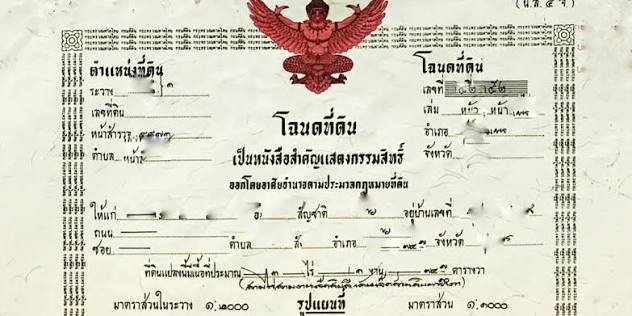
A Chanote, formally known as a Nor Sor 4 Jor title deed, is an important land title document in Thailand.
For a villa or land-based property in Koh Samui, the land title should be carefully reviewed as part of the due diligence process.
However, the existence of a Chanote does not mean that every aspect of a property purchase is automatically safe.
A buyer should still investigate:
- Registered ownership
- Mortgages
- Liens
- Easements
- Access
- Boundaries
- Building legality
- Development restrictions
- Other registered rights
The question is not simply:
“Does the property have a Chanote?”
It is:
“What does the title actually show, and can the property legally be used and transferred in the way I intend?”

Can Foreigners Buy Off-Plan Property in Koh Samui?
Yes, foreigners can purchase certain off-plan developments, but an off-plan purchase introduces additional risks.
Before buying, investigate:
- Developer ownership
- Construction approvals
- Project permissions
- Ownership structure
- Completion timetable
- Payment schedule
- Contractual cancellation rights
- Foreign ownership quota if it is a condominium
- What happens if construction is delayed
- Developer track record
An attractive show villa or computer-generated rendering does not guarantee that the finished project will be identical.
For significant purchases, have the sale contract independently reviewed before signing.

Can Foreigners Rent Out Property in Koh Samui?
Potentially, yes, but ownership does not automatically mean that every rental strategy is legal.
This is particularly important for buyers intending to operate a property as a short-term holiday rental.
Before buying an investment property, investigate:
- Applicable accommodation and hotel regulations
- Licensing requirements
- Condominium rules
- Development rules
- Local requirements
- Tax obligations
- Property management arrangements
A property that works well as a private holiday home may not necessarily be suitable for operating as a short-term rental business.
If rental income is essential to your investment calculation, verify the intended rental model before purchasing.
Is It Better for a Foreigner to Buy a Condo or Villa in Koh Samui?
There is no universal answer.
The right choice depends on your priorities.
| Buyer priority | Condo | Villa |
|---|---|---|
| Direct foreign freehold | Usually easier | More complicated |
| Private pool | Less common | Common |
| Land ownership | No | Generally not directly by foreigner |
| Maintenance | Often simpler | Usually higher |
| Privacy | Variable | Usually higher |
| Space | Usually smaller | Usually larger |
| Lifestyle | Convenient | More private |
| Legal structure | Relatively straightforward | Requires more due diligence |
| Rental potential | Location dependent | Location and management dependent |
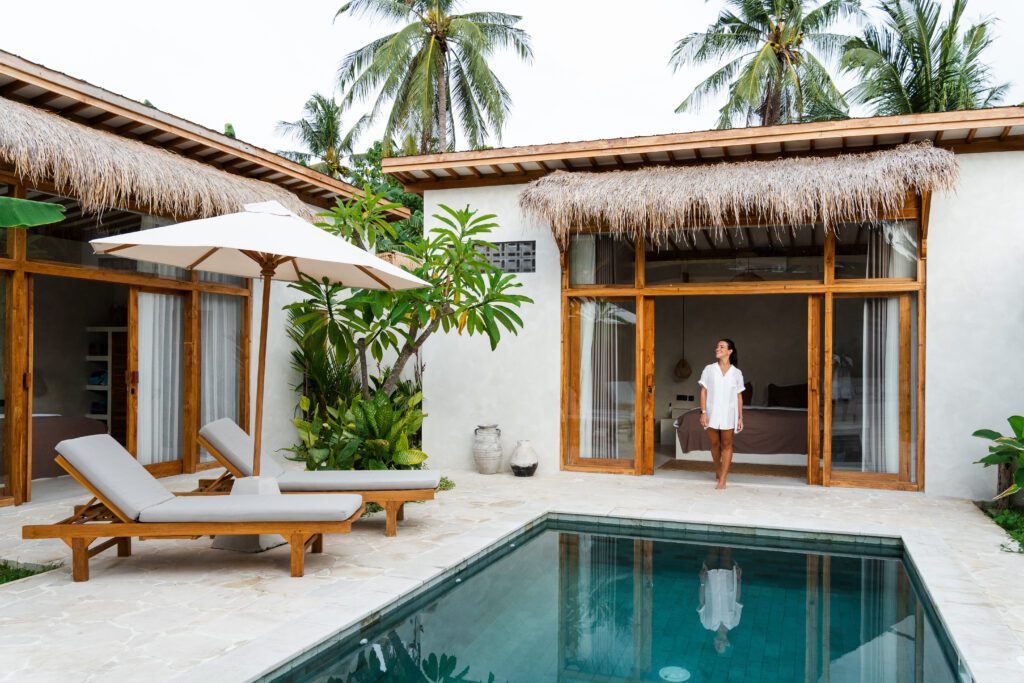
For buyers prioritizing straightforward foreign freehold ownership, a qualifying condominium may be attractive.
For buyers prioritizing privacy, outdoor space and a private pool, a villa may be more appealing—but the legal structure needs closer attention.

How to Buy Property in Koh Samui as a Foreigner
A sensible buying process looks like this.
Step 1: Decide what you want to buy
Determine whether you want:
- A condominium
- A villa
- A holiday home
- A permanent residence
- An investment property
- A development property
Step 2: Establish your budget
Budget for more than the advertised purchase price.
Consider:
- Purchase price
- Transfer costs
- Taxes
- Legal fees
- Due diligence
- Renovation
- Furniture
- Management
- Maintenance
- Insurance
- Currency exchange
Step 3: Choose the location
Research different parts of Koh Samui rather than choosing a property solely from online photographs.
Consider:
- Beach access
- Roads
- Traffic
- Restaurants
- Shopping
- Hospitals
- Schools
- Airport access
- Noise
- Views
- Future development
- Rental demand
Step 4: Establish the ownership structure
Do this before signing a binding contract.
Ask:
What exactly will I own?
If it is a condominium, establish whether it is foreign freehold.
If it is a villa, establish who owns the land and what legal rights you will have over it.
Step 5: Appoint an independent lawyer
The lawyer should represent your interests.
Do not assume that the developer’s, seller’s or agent’s lawyer is independent simply because they have been recommended to you.
Step 6: Complete due diligence
Check the title, ownership, building, access, contracts, encumbrances and relevant permissions.
Step 7: Sign the agreement
Only after you understand the transaction should you sign the purchase agreement and pay the agreed deposit.
Step 8: Complete the transfer
Depending on the property, completion may involve registration at the relevant Land Office.
For a condominium, the foreign quota documentation is an important part of the transfer process.

What Are the Biggest Risks for Foreign Buyers in Koh Samui?
1. Buying the wrong ownership structure
The biggest mistake is agreeing to a property before understanding what you actually own.
2. Assuming land ownership is included with a villa
A villa purchase does not automatically give a foreign buyer ownership of the underlying land.
3. Trusting verbal promises
Important promises about:
- Lease renewals
- Rental income
- Resale
- Development
- Building permissions
- Ownership
should be documented and legally reviewed.
4. Ignoring title and access
A beautiful property is not a good purchase if the legal title or access is problematic.
5. Using nominee arrangements
A nominee structure designed to circumvent Thailand’s foreign land ownership restrictions can create serious legal problems.
6. Buying based on projected rental income
Projected rental returns are not guaranteed.
Calculate realistic net income after management, maintenance, taxes, vacancies and other expenses.

Questions to Ask Before Buying Property in Koh Samui
Before paying a deposit, ask the seller or agent:
Ownership
- Who owns the land?
- Who owns the building?
- What exactly will I own?
- Is the property freehold or leasehold?
- Is the lease registered?
Legal
- What type of land title exists?
- Are there mortgages or liens?
- Is there legal road access?
- Does the building have the required permits?
- Are there outstanding disputes?
Condominium
- Is this a legally registered condominium?
- Is foreign freehold available?
- How much foreign quota remains?
- Can the juristic person provide written confirmation?
Investment
- What is the actual rental history?
- What are the management costs?
- What are the annual maintenance costs?
- Can the property legally be rented in the intended way?
Contract
- What happens if due diligence fails?
- What happens if the seller cannot transfer the property?
- Who pays the applicable fees and taxes?
- What happens if completion is delayed?

Can Foreigners Buy Property in Koh Samui? FAQ
Can foreigners buy property in Koh Samui?
Yes. Foreigners can buy certain property in Koh Samui, including qualifying condominium units under foreign freehold ownership. Foreigners generally cannot directly own Thai land, although limited statutory exceptions exist.
Can foreigners buy villas in Koh Samui?
Yes. Foreigners can acquire villas and buildings, but the ownership structure needs to be considered separately from ownership of the land. A common structure involves a lease or other legally recognized rights over the land.
Can foreigners own land in Koh Samui?
Generally no. Thai law restricts foreign land ownership. A limited exception allows qualifying foreigners to acquire up to 1 rai for residential purposes subject to significant investment and government permission.
Can foreigners own condos in Koh Samui?
Yes. Foreigners can own qualifying condominium units, subject to Thailand’s foreign ownership rules. The foreign ownership limit is generally 49% of the total unit space in a registered condominium.
What is the safest property for a foreigner to buy in Koh Samui?
There is no universally safest property. However, a qualifying foreign-freehold condominium can provide a relatively straightforward ownership structure. Villas can also be appropriate but generally require more careful analysis of land and building rights.
Do foreigners need a Thai partner to buy property?
No. A foreigner does not generally need a Thai spouse or partner simply to purchase a qualifying condominium in their own name.
However, Thai land ownership restrictions remain applicable regardless of whether a foreign buyer has a Thai partner.
Can foreigners buy property in Koh Samui without a Thai company?
Yes. A qualifying condominium can be owned directly by an eligible foreign buyer, subject to the applicable rules. A company is not inherently required simply because the buyer is foreign.
Does buying a property give a foreigner a Thai visa?
No. Property ownership and immigration status are separate matters.
Can foreigners buy property in Koh Samui remotely?
Some transactions can be completed with appropriate legal representation and powers of attorney, but personally inspecting the property before committing significant funds is strongly recommended.
Should foreigners use a lawyer when buying property in Koh Samui?
Yes, independent legal advice is strongly recommended. This is especially important for villas, land-based property, leasehold transactions, off-plan developments and any transaction involving a corporate structure.

Final Answer: Can Foreigners Buy Property in Koh Samui?
Yes, foreigners can buy property in Koh Samui.
The key is understanding that buying property is not the same as owning land.
For many foreign buyers:
Condominium → foreign freehold may be possible
Villa → ownership of the building may be possible, while the land is held through an appropriate legal structure
Land → direct foreign ownership is generally restricted
The best approach is to determine the ownership structure before signing a purchase agreement.
If you are considering buying a property in Koh Samui, the most important questions are:
- What exactly am I buying?
- Who owns the land?
- What rights will I have?
- Are those rights legally registered?
- Can I use the property for my intended purpose?
- Can I sell or transfer my interest later?
- Have an independent lawyer verified everything?
Koh Samui has a substantial market for foreign property buyers, from condominiums and apartments to private villas and luxury developments. But the best purchase is not simply the property with the best view or the highest advertised rental return.
It is the property where the ownership structure, legal due diligence, location, price and intended use all work together.
This article provides general information and is not legal, tax or financial advice. Thai property and foreign ownership rules can change. Foreign buyers should obtain independent advice from a qualified Thai property lawyer before entering into a purchase agreement.